How to Sell Clothes Online in 2026: The Fashion Ecommerce Photography Guide Every Seller Needs
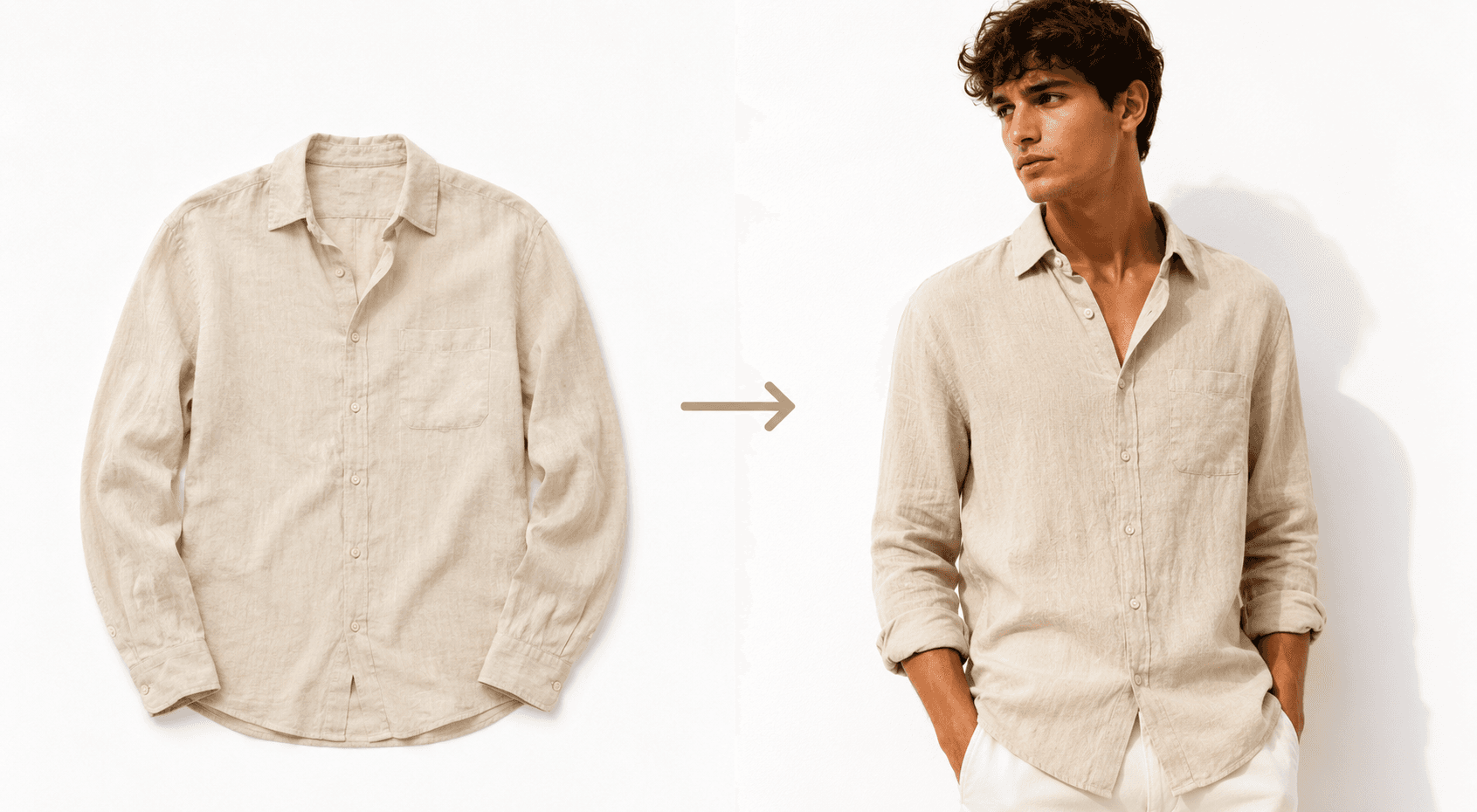
Most fashion sellers who struggle to grow online do not have a product problem. They have a photography problem.
The product is good. The pricing is competitive. The listing is live on Amazon, Flipkart, Shopify, or Etsy. But sales are flat. Visitors browse. They don't buy.
In 2026, global ecommerce retail sales are projected to reach $6.88 trillion. Fashion and apparel is one of the top three categories sold online. In that environment, your product images are not a supporting element of your listing. They are the listing.
FEATURED SNIPPET
How do you sell clothes online successfully in 2026?
To sell clothes online effectively in 2026, product photography is the single most important factor. Listings with high-quality model photography convert up to 3x better than flat images. AI fashion photography tools like Studiofy now allow any seller to generate professional model photos in seconds, without a photoshoot.
Studiofy At a Glance
The State of Fashion Ecommerce in 2026: Why the Visual Bar Has Never Been Higher
Fashion ecommerce is no longer a niche channel. It is the primary shopping channel for clothing, accessories, and footwear across most major markets globally.
India
On a trajectory to cross $345 billion in ecommerce by 2030. Surat, Tiruppur, Jaipur, Ahmedabad, and Ludhiana are generating enormous fashion inventory flowing into Amazon, Flipkart, and Meesho.
United Kingdom
One of Europe's most mature fashion ecommerce markets. London, Manchester, and Birmingham are home to thousands of independent fashion brands on Etsy, ASOS Marketplace, and Shopify.
United States
The world's largest fashion ecommerce market. New York, Los Angeles, Miami, and Chicago buyers have the highest visual expectations of any market globally.
South Korea
One of the most fashion-forward ecommerce markets in Asia. Seoul, Busan, and Incheon hold extremely high visual standards for product imagery.
Germany, France, Spain
Three of Europe's largest ecommerce markets. Sellers in Berlin, Paris, and Madrid compete on Amazon.de, Amazon.fr, and European Shopify stores.
Emerging Markets
Australia, Brazil, Turkey, Vietnam, Nigeria, and Kenya are all experiencing rapid ecommerce growth with fashion among the leading categories.
Why 80% of Fashion Sellers Are Losing Sales to Images, Not Products
67% of consumers say image quality is more important than product descriptions or customer reviews when making an online purchase. The image is the first, most powerful, and often the only thing that determines whether a buyer trusts your listing enough to click and convert.
Buyers in Mumbai, London, New York, Berlin, and Seoul make a visual judgment about your product in under three seconds. In those three seconds they answer: Does this look like what I'm looking for? Can I see how this fits in real life? Does this seller look credible enough to trust?
Better images don't just look good. They compound. Higher click-through rate signals the algorithm. The algorithm rewards it with better ranking. Better ranking drives more impressions. More impressions drive more sales.
Platform-by-Platform: What Fashion Ecommerce Photography Needs to Be in 2026
Amazon India, US, UK, .de
Secondary images are where model photography lives — and where conversions happen. Listings with 5–7 high-quality images including at least one model shot significantly outperform those with fewer images.
Flipkart & Meesho
Buyers often shop on low-bandwidth mobile connections and small screens. Model photography communicates more information more quickly than a flat lay — even on a 5-inch screen with a compressed image.
Shopify D2C Stores
Product photography serves two purposes: conversion and brand identity. Consistent styling across the entire catalog is essential. AI photography keeps your visual language consistent while allowing unlimited variations.
Etsy Independent Sellers
Etsy buyers respond to lifestyle and model photography that tells a story. For jewellery especially, images showing the piece worn on a model are essential — buyers want to see how it looks worn.
Instagram Shops
Content volume is as important as content quality. The average Instagram fashion brand needs 12–20 new product images per week. AI photography solves this — multiple model images per product from a single upload.
TikTok Shops
Even higher content volume demands than Instagram. AI fashion photography allows TikTok shop brands to generate different poses, backgrounds, and styling contexts — giving them a week's worth of content from one product photo.
For Amazon Sellers in Mumbai, Delhi, Surat, and Tiruppur
The volume of listings in fashion categories on Amazon India means your images need to stand out at thumbnail size. Model photography creates more visual impact at small sizes than flat lays — the human element draws the eye in scroll-heavy browsing.
For Ethnic Wear Sellers, Saree Brands, and Kurti Manufacturers
Indian marketplace buyers are highly visual, comparison-driven shoppers. If your listing shows a flat lay and the seller next to you shows the same price point with model photography, the click goes to the model image — consistently.
How AI Fashion Photography Is Changing the Game for Online Clothing Sellers
Cost
Traditional fashion photography costs ₹38,000 to ₹2,10,000 per shoot in India, or $1,500 to $9,200 in the US and Europe. Studiofy is a fraction of this — accessible to individual sellers and single-person Etsy shops.
Speed
A traditional photoshoot takes 7–21 days from booking to final edited images. Studiofy generates results in seconds. For sellers on a tight timeline, this is a structural advantage.
Scalability
AI generation produces unlimited variations — multiple models, multiple poses, multiple backgrounds — from the same product. This serves both catalog sellers and content-heavy brands.
Global Accessibility
A fashion seller in Jaipur, Bucharest, Lagos, or Ho Chi Minh City faces the same visual challenge as one in New York. Studiofy is a mobile app — available anywhere with a smartphone.
How Studiofy Works: 4 Steps to Professional Product Photography
Upload your product image
A flat lay, hanger shot, or plain-background smartphone photo. No DSLR required.
Select your AI model preferences
Choose model appearance, pose, background, and lighting style. Adjust to match your brand aesthetic and target market.
Generate
Studiofy's AI produces a photorealistic model image in seconds — accurate to your product's colour, texture, fit, and structure.
Download and publish
High-resolution output, ready for Amazon, Flipkart, Meesho, Shopify, WooCommerce, Etsy, Instagram, TikTok, Meta Ads, or Google Shopping.
Who Needs AI Fashion Photography Right Now
Fashion Startups and DTC Fashion Brands — Launch with catalog-quality model photography without the ₹2,00,000 photoshoot budget
Clothing Manufacturers and Garment Exporters — Surat, Tiruppur, Jaipur, Ludhiana, and Ahmedabad manufacturers generating professional catalog imagery for domestic and international buyers
Private Label Apparel Brands — Model photography is fundamental brand equity — buyers pay premium prices for brands that look premium
Boutique Fashion and Streetwear Brands — Generate images across different visual contexts from the same product while maintaining brand identity
Jewellery Brands — A ring, necklace, or earring shown on a model converts dramatically better than the same piece on a white surface
Sportswear and Activewear Brands — Model photography communicates fit and performance appearance in a way flat images cannot
Modest Fashion Brands — One of the fastest-growing global categories — Studiofy's model preferences allow on-brand, appropriate imagery for any audience
Fashion Marketing Agencies — Generate model images for client catalogs on demand — reducing per-client production time and cost
Dropshipping Fashion Stores — Create unique, branded model images from supplier product photos — visual differentiation from identical competitor listings
Traditional Fashion Photoshoot vs. Studiofy: The Full Numbers
Common Mistakes Fashion Sellers Make With Product Photography in 2026
Running flat lays as the primary image on every platform — the single most common and most costly mistake — flat lays should never be your lead image on any fashion platform in 2026
Using a different visual style for each platform — an incoherent brand identity across Amazon, Instagram, and Shopify signals an unpolished brand to buyers
Not updating catalog images seasonally — images that look two years old signal a brand that is not active or current
Ignoring mobile optimisation — more than 70% of fashion ecommerce purchases in India, Southeast Asia, and Africa happen on mobile devices
Underinvesting in jewellery and accessory photography — a necklace shown on a neck converts dramatically better than the same necklace on a velvet surface
Not A/B testing image variations — use AI generation to test which model type, pose, or background drives higher click-through on your primary marketplace listings